
Milton, Ontario Real Estate
Milton is one of the GTA’s fastest-growing family communities — but not all areas are the same. We help you understand where to look, what to expect, and how to make the right move.
From neighbourhoods and home styles to schools, commute, and pricing — here’s what you need to know before making a move to Milton.
Why Families Are Choosing Milton
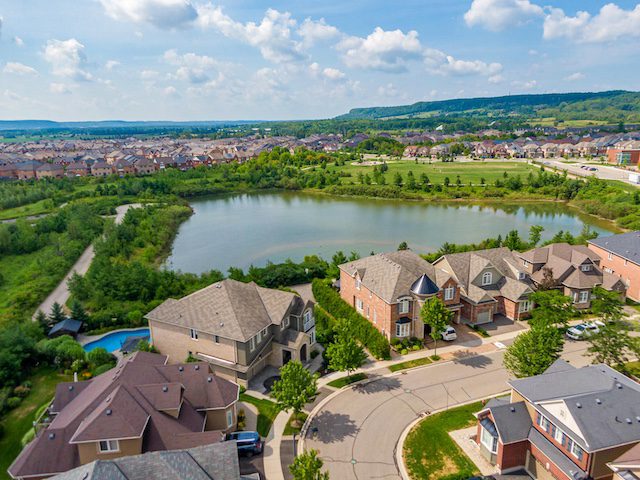
There’s a reason so many families from Mississauga, Brampton, and Etobicoke have been making the move west. Milton offers something genuinely hard to find in the GTA: space, community, and access to nature — at a price point that still makes sense for growing families.
The housing stock here is newer. You’re not inheriting someone else’s 1970s layout. You’re getting open-concept main floors, modern kitchens, and double-car garages in developments that were built in the last 20 years.
But honestly? What really sets Milton apart isn’t the square footage. It’s what’s outside your door.
Milton sits right on the Niagara Escarpment — a UNESCO World Biosphere Reserve. Rattlesnake Point, Kelso Conservation Area, and Crawford Lake are all within 20 minutes. Hiking, rock climbing, a beach in summer, cross-country skiing in winter. If you have kids, this is the kind of place where they actually go outside.
The community feel is real too. These are newer neighbourhoods — Beaty, Cobban, Hawthorne Village — full of families at the same stage of life. Kids’ sports leagues, active community associations, neighbours you actually know. It’s the kind of town where people stay once they land.
Is it the cheapest market in the GTA? No. But compared to Oakville and Burlington, you’re getting noticeably more home for your dollar — and a quieter pace of life that Mississauga just doesn’t offer.
Unsure About the Buying Process?
Milton Housing Market Overview
Milton’s housing mix is more diverse than most people expect — and understanding that matters when deciding where to live.
Around historic Downtown Milton, you’ll find older homes from the early 1900s through the 50s and 60s — bungalows, 1.5 storey, and classic two-storey homes on mature lots with established trees.
From the 1970s through mid 1980s, the town expanded with larger detached homes split level and townhomes.
Then came the major growth phase. Over the past 20–25 years, newer neighbourhoods like Beaty and Clarke rose up, then development progressed across town to Scott and Harrison, and now the south side in Ford, Walker and Cobban have filled in with modern, open-concept homes built for today’s families.
There’s also a quieter side to Milton — rural and estate properties near the escarpment, offering larger lots, privacy, and a completely different lifestyle.
The key is knowing where to look — because each area offers something very different.
- Detached homes: The most common option across most neighbourhoods — typically 3 to 5 bedrooms, older homes and newer builds with modern finishes. Price range: $900K–$2+M depending on size, location, and lot.
- Semi-detached: A solid middle ground — more space than a townhome, lower entry than fully detached. Typically $750K–$1.2M.
- Freehold townhomes: Popular with first-time buyers and young families making their first move into Milton. Generally $650K–$950K.
- Condo townhomes / stacked units: A great affordable way into the Milton market. Typically $650K–$900K.
- Condo apartment: The most affordable way to enter the Milton Market. Typically 450K-$950k, depending on size, age and amenities.
Milton Neighbourhoods
One of the more established newer communities in town. Beaty has matured nicely — the trees are filling in, the schools are solid, and families who moved here 10–15 years ago are still here. Good pick if you want an established neighbourhood feel without buying into an older home.
A quiet, established neighbourhood built mainly in the 1970s. Known for larger lots, mature trees, pools and a mix of bungalows, split-levels, and two-storey homes. Great young families looking for quiet streets, space and a more traditional suburban feel.
The original part of town, full of character and history. Homes range from century homes to post-war builds on mature, tree-lined streets, all within walking distance to downtown and Mill Pond. Ideal if you value charm, location, and a true small-town feel
One of the most convenient areas in Milton, especially for commuters. Close to the 401, GO Station, shopping, and recreation. A solid all-around neighbourhood with a mix of detached homes, townhomes, and condos
Possibly Milton’s most sought after neighbourhood. Offering an established, mature neighbourhood, it’s closer to downtown with quiet streets, pools and parks. More variety in types of homes with large detached semi-detached and townhouses. If you want to be close to Main Street Milton, this is where to start.
Clean, newer neighbourhood with quick access to the 401 coming in the Tremaine exchange. Bordering the escarpment, Harrison offers a natural fit for families who love being close to conservation areas.
Located closer to the escarpment, offering a slightly quieter and more scenic setting. A good mix of builders with premium and luxury custom homes in the north. With access to trails and conservation areas nearby, this is a sought after areas. A great fit if you want modern living with a bit more nature around you.
Campbellville / Rural North — If you’re after acreage, escarpment views, or an estate property, look north. It’s a lifestyle choice — not for everyone — but it’s genuinely beautiful country up there.
Not sure which neighbourhood fits your family? That’s exactly what we help with.
Schools in Milton
Milton is served by two public school boards: the Halton District School Board and the Halton Catholic District School Board. French immersion programs are available through both school boards, but not all schools — ask us about which neighbourhoods have French immersion schools nearby.
At the secondary level, Milton has three public high schools: Craig Kielburger Secondary School, Milton District High School and Elsie MacGill Secondary School.
As well as three catholic Bishop Reding Catholic Secondary School, St. Kateri Tekakwitha and St. Francis Xavier
All six are well-regarded. As the town grows, new schools are being added — which means some newer neighbourhoods are still waiting on a school within walking distance. It’s worth asking about any specific address before you buy.
Getting to Toronto by GO Train
The Milton GO Station is the western terminus of the Milton Line. Travel time to Union Station is approximately 75–80 minutes. We’re glad we have it but it’s not perfect. The biggest issue isn’t the ride length — it’s frequency. The Milton Line runs less often than the Lakeshore lines, which means fewer options at peak hours and limited off-peak service. Expansion plans and studies have been in the works for many years but progress is slow.
Many Milton residents drive to work, or drive partway and connect from a closer station.
Getting Around by Car
Milton sits right on the 401, about 54 km from downtown Toronto. In light traffic, that’s 45–50 minutes. In GTA rush hour, add 20–30 minutes in either direction. The 407 (toll highway) is nearby and can take some of the edge off for certain routes.
The honest truth: Milton works best for families where at least one parent works hybrid or remote, or where the commute works within school hours. A lot of families make that call every day and don’t regret it. But go in with clear eyes.
Work With a Milton Real Estate Expert
Andrew and Lisa Roach have been helping families buy and sell in Milton and across Halton Region for over 15 years. More than 250 families have worked with the Roach Family Real Estate Team.
We know the neighbourhoods here — which streets land you in the right school catchment, which new phases are moving fast, which builders have the better reputations. We know the commute because our clients live it. And we know how to negotiate in this market because we’re in it every day.
If you’re a family making the move to Milton — from Mississauga, Toronto or from wherever the GTA priced you out — we’ve helped a lot of people in exactly your situation. We’re not here to close a deal. We’re here to make sure you make the right one.

What Stage Are You At?
Not Sure Where to Start?
Find out what homes are actually selling for compared to their list price.
Already done your research?
Already know the buying process and just have questions and need a local expert for guidance?