
Burlington, Ontario Real Estate
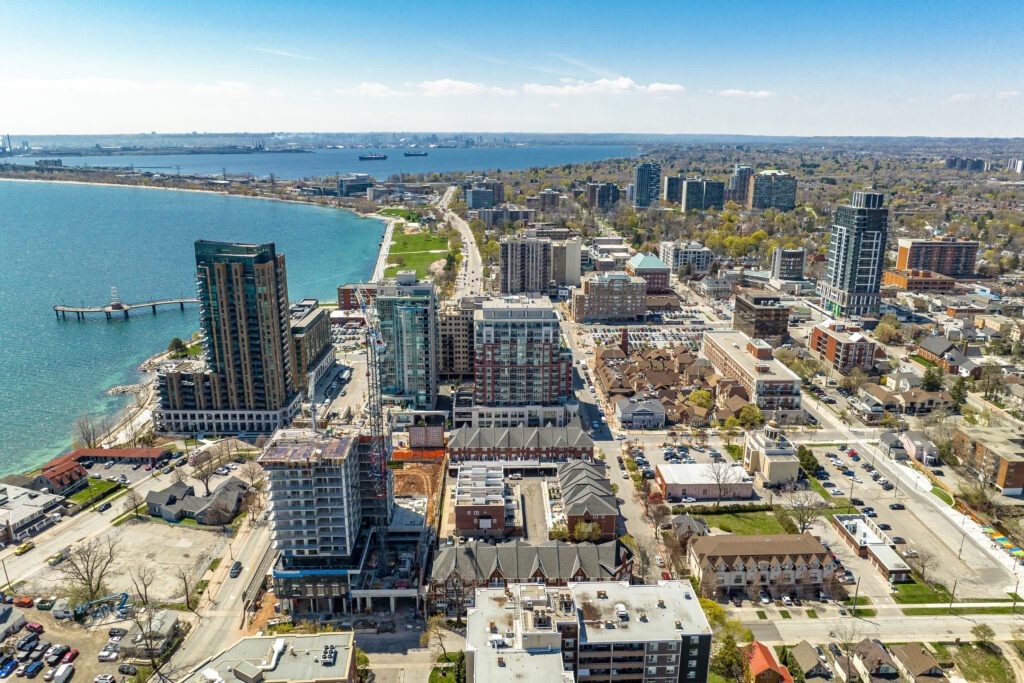
Burlington sits on the western shore of Lake Ontario — waterfront trails, a walkable downtown, and the kind of established neighbourhoods where people actually stay. It’s one of Halton Region’s most liveable cities, and it draws families and downsizers alike who want real quality of life without giving anything up on location.
If you’re buying or selling in Burlington, you’re in the right place. I work in Halton Region every day, and Burlington is a market I know well — neighbourhood by neighbourhood, street by street.
Why Families Are Choosing Burlington
Burlington doesn’t need a sales pitch. It earns its reputation.
Start with the waterfront. Spencer Smith Park runs along Lake Ontario, with the Brant Street Pier, a waterfront trail, and a beach that actually gets used. It’s the kind of community anchor that changes how a city feels on a Tuesday in July.
Downtown Burlington is the real deal. Brant Street has many independent restaurants, boutique shops, galleries, and a farmers market — the kind of downtown core most Ontario cities wish they had. It’s walkable, it’s active, and it draws people year-round.
For families, the green space is a big draw: Bronte Creek Provincial Park, an extensive trail network, and the Royal Botanical Gardens — over 1,100 hectares of nature within the city.
Practically speaking, Burlington is well-connected. Three GO stations (Aldershot, Burlington, and Appleby), quick QEW and Hwy 403 access, and a commute to Toronto that’s genuinely manageable. Whether you’re relocating from the GTA or just looking for more space, Burlington delivers on both the lifestyle and the logistics.
Unsure About the Buying Process?
Burlington Housing Market Overview
Burlington’s housing mix covers a wide range — and understanding that matters when deciding where to live.
In the older south-end neighbourhoods — Roseland, Shoreacres, and around Downtown Burlington — you’ll find pre-1960s brick homes on large lots with mature trees. Character and premium pricing in equal measure.
The 1960s through 1980s brought established family neighbourhoods: Aldershot, Mountainside, Brant Hills — solid homes, good lot sizes and family-filled streets.
The 1990s and 2000s filled in Millcroft, Orchard, and Headon Forest — newer subdivisions purpose-built for families, with the schools and parks to match. More recently, Alton Village and the north end have added modern builds and townhomes for a younger buyer profile.
There’s also a growing condo market along Lakeshore Road and in the downtown core — both high-rise and mid-rise, popular with downsizers and buyers who want the Burlington lifestyle without the maintenance of a detached home.
The key is knowing where to look — because each area of Burlington offers something genuinely different.
- Detached homes: The most sought-after option, especially in south Burlington. Ranges from classic brick bungalows to executive-sized homes on large lots. Price range: $950K–$2.0M+ depending on area, size, and proximity to the lake.
- Semi-detached: A solid middle ground — more space than a townhome, lower entry than fully detached. Typically $800K–$1.1M.
- Freehold townhomes: Popular with young families and move-up buyers. Generally $750K–$950K.
- Condo townhomes / stacked units: Good entry point into the Burlington market. Typically $450K–$750K.
- Waterfront / Luxury: Lakefront and premium south-end properties. $2M–$5M+.
Burlington Neighbourhoods
Roseland
Premier south Burlington — large lots, mature trees, executive homes, and you’re walking distance to the lake. One of the most sought-after addresses in Halton Region. The housing stock skews older and larger, with well-maintained properties and a neighbourhood feel that’s genuinely hard to find elsewhere. Prices reflect it.
Shoreacres
Sits alongside Roseland in south Burlington, with a similar draw — established streets, mature landscaping, and close proximity to the lake. Tends to attract buyers who want the premium south-end lifestyle with slightly more variety in the housing stock. Quiet, well-established, and consistently in demand. When something comes up here, it moves.
Aldershot
The most eclectic neighbourhood in Burlington. There’s an arts-and-independent-business energy here that sets it apart from anything else in Halton Region. The Aldershot GO station makes it one of the stronger options for Toronto commuters. Housing ranges from modest older bungalows to fully renovated executive homes — real entry points for a wider range of buyers.
Tyandaga
Elevated setting with escarpment views and the Tyandaga Golf Course nearby. Homes are primarily executive detached, and the area draws buyers who want space, natural surroundings, and a more removed feel while staying in Burlington. Prestigious, quiet, and slightly under the radar.
Millcroft
One of Burlington’s most consistently popular family neighbourhoods. Good schools, Millcroft Park, well-maintained streets, and a mix of detached and semi-detached homes at a practical price point for move-up buyers. People buy here intending to stay — and usually do.
Orchard
Popular with young families for real reasons: parks, transit access, and a community-oriented feel. Housing stock is primarily late-1990s to 2000s detached and townhomes — good bones with room to update. If you’re moving up from a townhouse and looking for your next step, Orchard is worth a serious look.
Headon Forest
Established neighbourhood backing onto Bronte Creek Provincial Park — which sounds good on paper and actually delivers. Mature trees, good lot sizes, and a natural buffer that makes it feel quieter than surrounding areas. A strong choice for families and buyers who value that outdoor connection in day-to-day life.
Alton Village
Burlington’s newest major neighbourhood. Modern builds, newer infrastructure, and a buyer profile that skews younger. Still developing its identity, but housing quality is strong and price points are relatively more accessible than south Burlington. A good option if you want a newer build in a Halton Region location.
Not sure which neighbourhood fits your family? That’s exactly what we help with.
Schools in Burlington
Burlington schools fall under two primary boards: the Halton District School Board (public) and the Halton Catholic District School Board (Catholic). Both offer a wide range of elementary and secondary options across the city, with French immersion programs available at select schools — it’s always worth confirming availability and boundaries directly with the board.
At the secondary level, Burlington has a smaller number of schools that serve larger catchment areas. Public high school options include Nelson High School, Dr. Frank J. Hayden Secondary School, Burlington Central High School. Catholic secondary schools include Assumption Catholic Secondary School and Corpus Christi Catholic Secondary School.
At the elementary level, there are significantly more schools spread throughout Burlington, each tied to specific neighbourhood catchments. Public options include schools like Charles R. Beaudoin Public School and Frontenac Public School, while Catholic options include St. Raphael Catholic Elementary School and St. Anne Catholic Elementary School. The right school will depend entirely on where you live, as boundaries can change and are enforced quite strictly.
Overall, Burlington’s schools are well regarded, and the mix of public, Catholic, and French immersion pathways gives families flexibility depending on their priorities. If schools are a key part of your move, it’s worth mapping your target neighbourhoods against school boundaries early — it often has a bigger impact on your decision than most people expect.
Getting to Toronto by GO Train
Burlington has three Lakeshore West GO stations — Aldershot, Burlington, and Appleby. That’s more coverage than most Halton cities, and it matters. The Lakeshore West line runs frequently and reliably, with travel time to Union Station of approximately 50–65 minutes depending on the station and time of day. If you’re a regular GO commuter, this is a material advantage over other Halton options.
Note: Aldershot GO is also served by the Kitchener line, giving it exceptionally strong connectivity for the west end of Burlington.
Getting Around by Car
The QEW runs directly through Burlington — east toward Toronto and Mississauga, west toward Hamilton. Highway 403 connects you to the 401 corridor. Highway 407 (toll) cuts through the north end and is useful for routes heading inland.
What’s real life like?: Off-peak, Burlington’s highway access is genuinely good. During peak-hours, heavy QEW traffic toward Toronto is real — plan for it, or lean on the GO. Most Burlington residents figure out the right blend of both fairly quickly.
Work With a Burlington Real Estate Expert
Andrew and Lisa Roach have been helping families buy and sell in Burlington and across Halton Region for over 15 years. More than 250 families have worked with the Roach Family Real Estate Team.
Burlington and Halton Region is home territory. We know the neighbourhoods here — which streets put you closest to the waterfront, which areas have the right school catchment, where the newer builds offer the best value relative to the south end. We know the commute options because our clients live them. And we know how to negotiate in this market because we’re in it every day.
If you’re making the move to Burlington — from Mississauga, Toronto, or anywhere the GTA — we’ve helped a lot of people in exactly your situation. We’re not here to close a deal. We’re here to make sure you make the right one.

What Stage Are You At?
Not Sure Where to Start?
Already done your research?